

Cozy Home Corner Setup for Families Explained
A cozy home corner setup for families is a designated nook within a shared living space, designed to support comfort, calm, and connection through intentional furniture placement, sensory elements, and accessible storage. Unlike a general seating area, a family corner serves a specific behavioral purpose: it gives every member of the household a physical anchor for slower, more meaningful activity. This article covers the essential components, design strategies, sensory considerations, and maintenance habits that keep a family corner functional and genuinely loved, drawing on 2026 expert insights and practical product guidance from Elarahandmadeboutique.
What are the essential elements of a cozy home corner for families?
A cozy home corner setup for families depends on three non-negotiables: physical comfort, accessibility, and distinct identity. Each element serves a different function, and removing any one of them produces a corner that looks good in photos but gets ignored in real life.
Physical comfort is the foundation. Seating options like beanbags, oversized floor cushions, or low upholstered chairs signal to the body that this space operates at a different pace than the rest of the house. Children especially respond to seating that lets them sink in rather than sit upright, which is why floor-level options consistently outperform standard chairs in family nook designs.
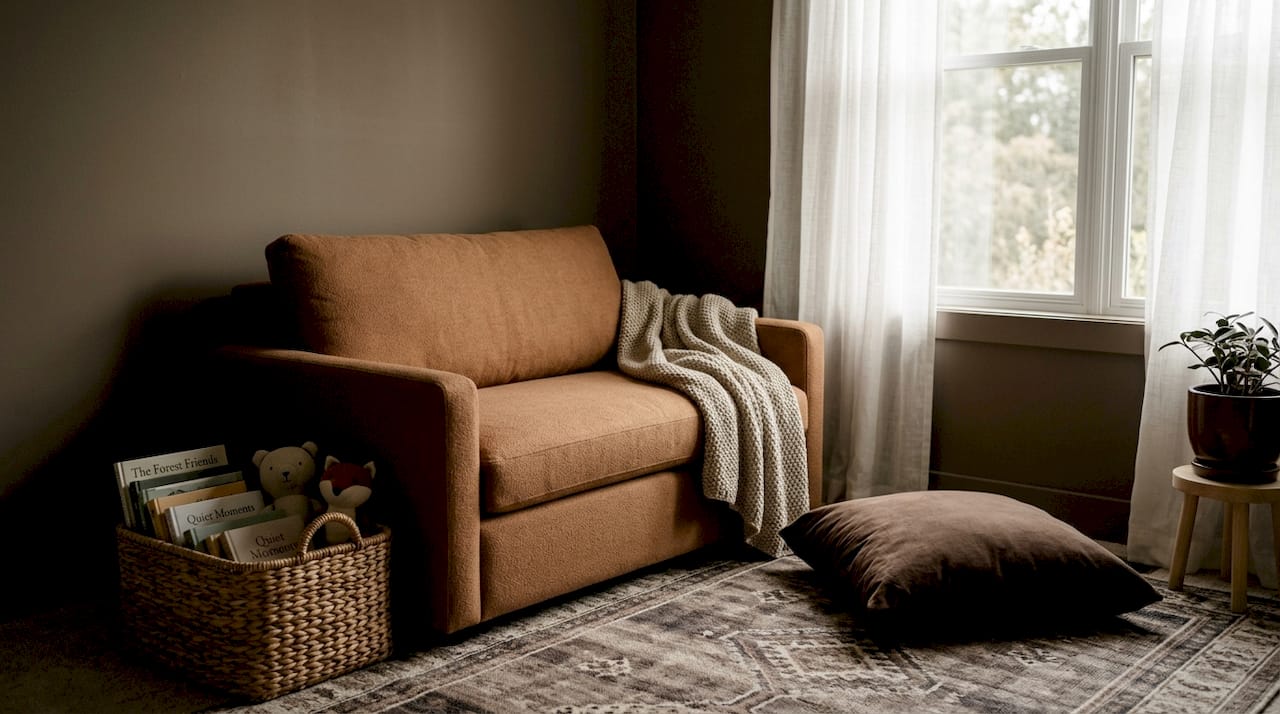
Accessibility determines whether kids actually use the space independently. Front-facing book storage at child height, bins within arm’s reach, and low shelving all remove the friction that causes corners to go unused. If a child has to ask an adult to retrieve something, the corner loses its function as an independent retreat.
Distinct identity separates the corner from the rest of the room visually and psychologically. A canopy, a dedicated lamp, a small rug, or a specific color palette on one wall creates a boundary that tells the brain: this area is different. That signal matters for both children and adults.
- Beanbags or floor cushions for low, comfortable seating
- Front-facing shelves or magazine racks at child height
- A canopy, curtain, or rug to define the space visually
- A dedicated light source such as a table lamp or string lights
- Personalized decor chosen with input from the children
Pro Tip: Let each child pick one item for the corner, whether a pillow, a small plant, or a favorite book display. Family involvement in creating the nook increases ownership and encourages consistent use.
How can families design a multi-functional corner that evolves throughout the day?
The most practical home corner design for families uses a single wall as the organizing framework, dividing it into three vertical zones. The one-wall design approach places decor and closed storage at the top, active learning materials in the middle, and toys or floor play items at the bottom. This layout creates visual balance and allows the same corner to transition from a morning reading spot to an afternoon play zone to an evening wind-down nook.
Color palette selection shapes how the space feels at each transition. Neutral base tones with one or two accent colors keep the corner visually calm without looking sterile. Warm whites, soft sage greens, and muted terracottas work well because they read as restful to both children and adults. Avoid high-contrast primary color schemes in the corner itself, even if the rest of the playroom uses them, because the corner’s job is to lower stimulation rather than raise it.
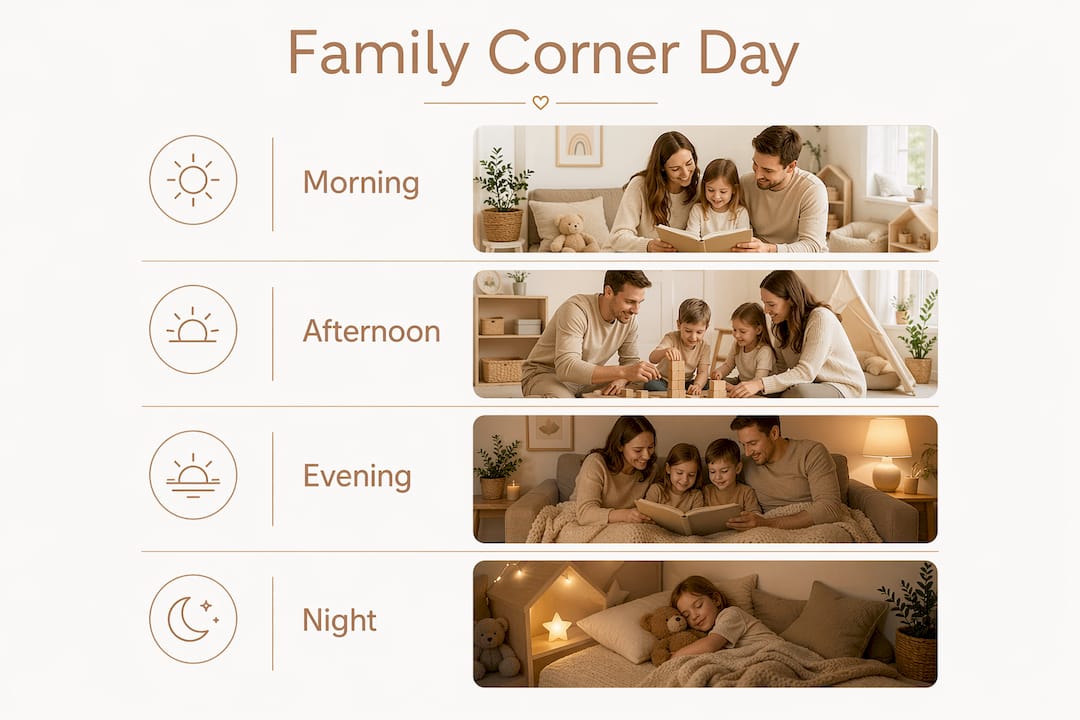
The table below shows how a single corner can shift function across a typical family day.
| Time of day | Primary activity | Setup adjustment |
|---|---|---|
| Morning (7am to 9am) | Reading and learning | Books forward-facing, lamp on, screens away |
| Midday (11am to 1pm) | Creative play | Bins accessible, art supplies or puzzles rotated in |
| Afternoon (3pm to 5pm) | Homework or quiet time | Flat surface added, distractions reduced |
| Evening (6pm to 8pm) | Wind-down and storytime | Soft lighting, throws out, calming toys only |
Getting children involved in the design process pays off in daily use. When kids choose the blanket color, arrange the books, or pick the small decorative items, they treat the space as theirs rather than as furniture placed by adults. That sense of ownership translates directly into how often and how willingly they use the corner.
What sensory and atmosphere features enhance comfort in family corners?
Cozy corners work best away from high-traffic areas, positioned where ambient noise and foot traffic are naturally lower. The sensory environment of the corner does as much work as the furniture. Lighting, scent, and texture each send signals to the nervous system that shift the household’s pace toward calm.
Soft lighting is the single most effective atmospheric tool. A dedicated lamp with a warm bulb, a string of fairy lights along a shelf, or a moon lamp on a low table all create a visual cue that this space operates differently from the overhead-lit kitchen or living room. Lava lamps or moon lamps are particularly effective for children because they provide gentle visual movement without the stimulation of a screen.
Texture works alongside lighting to reinforce the sensory message. Chunky knit throws, velvet cushions, and woven baskets add tactile variety that invites touch and slowing down. Calming scents, introduced through a small diffuser with lavender or chamomile, complete the atmosphere without overwhelming the space.
- Warm-toned lamp or string lights (avoid cool white or blue-spectrum bulbs)
- A moon lamp or lava lamp for gentle visual interest without screen stimulation
- Chunky knit throws and velvet or fleece cushion covers
- A small diffuser with lavender or chamomile essential oil
- Sensory tools like fidget toys, calming bottles, or textured fabric books for younger children
Pro Tip: Soft lighting and textures signal rest and help shift household energy to a calmer pace. Swap overhead lights for a lamp in the corner 30 minutes before bedtime to start the wind-down without a formal announcement.
Reducing visual clutter in the corner is as important as adding sensory comfort. A corner that doubles as a storage overflow zone loses its calming function quickly. Keep surfaces intentional: one or two decorative objects, a curated selection of books, and one basket for loose items is the practical ceiling for most family corners.
How can families maintain their cozy corner as a clutter-free space?
A cozy corner that is not maintained becomes a drop zone within two weeks. Planning easy cleanup with dedicated storage solutions from the start is the single most reliable way to preserve the corner’s function. Storage should be built into the design rather than added as an afterthought.
The following steps create a maintenance system that works with family routines rather than against them.
- Assign a basket or bin to every category of item in the corner. Books go in one place, small toys in another, throws folded in a third. Labeled handmade storage baskets make this system visible and easy for children to follow independently.
- Implement a nook-only toy rotation. Nook-only toys rotated regularly keep the space novel and prevent it from merging with the general play area. Swap out two or three items weekly to maintain interest without adding volume.
- Build a five-minute reset into the daily routine. A reset routine supported by easy cleanup systems maintains the corner’s purpose as a calm retreat. Tie it to an existing habit, such as after dinner or before bath time, so it becomes automatic rather than a chore.
- Audit the corner monthly. Remove anything that has not been used in the past two weeks. Cozy corners stay functional when they contain only what the family actually reaches for.
- Establish a screen-free rule for the corner. A corner that separates from screens and distractions encourages slower, more meaningful family activities like reading and conversation. This boundary also prevents the corner from becoming a secondary entertainment zone, which erodes its calming identity.
Family routines and rituals reinforce the corner’s role. A consistent storytime spot, a weekly puzzle tradition, or a Saturday morning reading hour all build the corner into family life in a way that no amount of decor can replicate on its own.
Key takeaways
A cozy home corner setup for families requires physical comfort, accessible storage, a distinct sensory identity, and a simple maintenance system to remain a functional and welcoming space.
| Point | Details |
|---|---|
| Three non-negotiables | Every effective family corner needs physical comfort, accessibility, and a distinct visual identity. |
| One-wall vertical design | Divide the wall into top storage, middle learning, and bottom play zones to support multiple daily activities. |
| Sensory atmosphere | Warm lighting, textured textiles, and calming scents shift household energy toward rest and connection. |
| Maintenance system | Dedicated baskets, a toy rotation schedule, and a daily five-minute reset prevent clutter from taking over. |
| Family involvement | Children who help choose and arrange the corner use it more consistently and treat it with more care. |
What I’ve learned from building family corners that actually get used
The advice that gets skipped most often is the simplest: design the corner for the family you have, not the one in the catalog photo. I’ve seen beautifully styled nooks with linen cushions and curated book spines that nobody sits in, because the seating was uncomfortable for a seven-year-old and the books were arranged for aesthetics rather than access.
The corners that work share one quality: they were built around observed behavior. Where does the family already gather? What do the kids reach for first? What time of day does the household most need a place to slow down? Answering those questions before buying a single item produces a corner that fits the family rather than a corner the family has to adapt to.
Small details carry more weight than most families expect. A single lamp on a timer, a basket that is genuinely easy to put things back into, a throw that is soft enough that a child will actually grab it. These are not decorative choices. They are functional ones. The quality materials and integrated decor that make a nook feel like a peaceful oasis are the same ones that make it durable enough to survive daily family life.
The cozy corner is also one of the most effective low-effort tools for reducing screen time without conflict. When the alternative to a screen is a genuinely comfortable, interesting, and personal space, children choose it more often than most parents expect.
— Stitched
How Elarahandmadeboutique products support your family corner
Elarahandmadeboutique designs handcrafted baskets and cozy textiles specifically for the kind of intentional living a family corner represents. Their woven home organization baskets give every category of corner item a dedicated home, from books and art supplies to throws and sensory toys, without adding visual noise to the space.
The Elarahandmadeboutique cozy living collection includes chunky knit throws and textured cushion covers that add the tactile warmth a family corner needs to feel genuinely inviting rather than just styled. Each piece is small-batch and artisanal, built to hold up to daily family use while keeping the corner looking considered rather than cluttered.
FAQ
What is a cozy home corner setup for families?
A cozy home corner setup for families is a designated nook within a shared living space that combines comfortable seating, accessible storage, and sensory elements to support calm, connection, and independent activity for all family members.
How do I choose the best corner furniture for families?
Prioritize low seating like beanbags or floor cushions, front-facing storage at child height, and a defined boundary such as a rug or canopy. These three elements form the physical foundation of any effective family nook.
How often should I rotate toys in a family corner?
Rotating nook-only toys weekly keeps the space novel and engaging for children while preventing the corner from becoming a general play area. Swap two to three items at a time rather than replacing everything at once.
What lighting works best in a family cozy corner?
Warm-toned lamps, string lights, or moon lamps work best because they signal rest without the stimulation of cool-spectrum or overhead lighting. Soft lighting contributes to emotional regulation and helps shift the household toward a calmer pace.
How do I keep a family corner from becoming cluttered?
Assign a dedicated basket or bin to every category of item, build a five-minute daily reset into an existing routine, and audit the corner monthly to remove unused items. Dedicated storage solutions planned from the start are the most reliable way to maintain the corner’s function as a calm retreat.