

Hygge Home Decor Elements List: 10 Cozy Essentials
The hygge home decor elements list is a curated set of tactile, warm, and inviting items drawn from Danish and Norwegian interior design philosophy, where the goal is to make every room feel like a refuge. HGTV groups the core categories as warm lighting, cozy textiles, and natural materials like wood, stone, and wicker. Hygge (pronounced “hoo-gah”) is the recognized Scandinavian term for this design philosophy. Understanding which specific elements belong on this list, and how to layer them, is the difference between a room that looks styled and one that actually feels warm.
1. Warm layered lighting as the foundation of hygge decor
Lighting is the single most defining element in any hygge home decor elements list. Warm-white bulbs at 2700K to 3000K replicate the amber glow of candlelight and are the technical baseline for hygge ambience. Overhead fixtures alone produce flat, institutional light that works against coziness. The fix is layering: table lamps, floor lamps, wall sconces, and candles positioned at eye level and near seating areas.
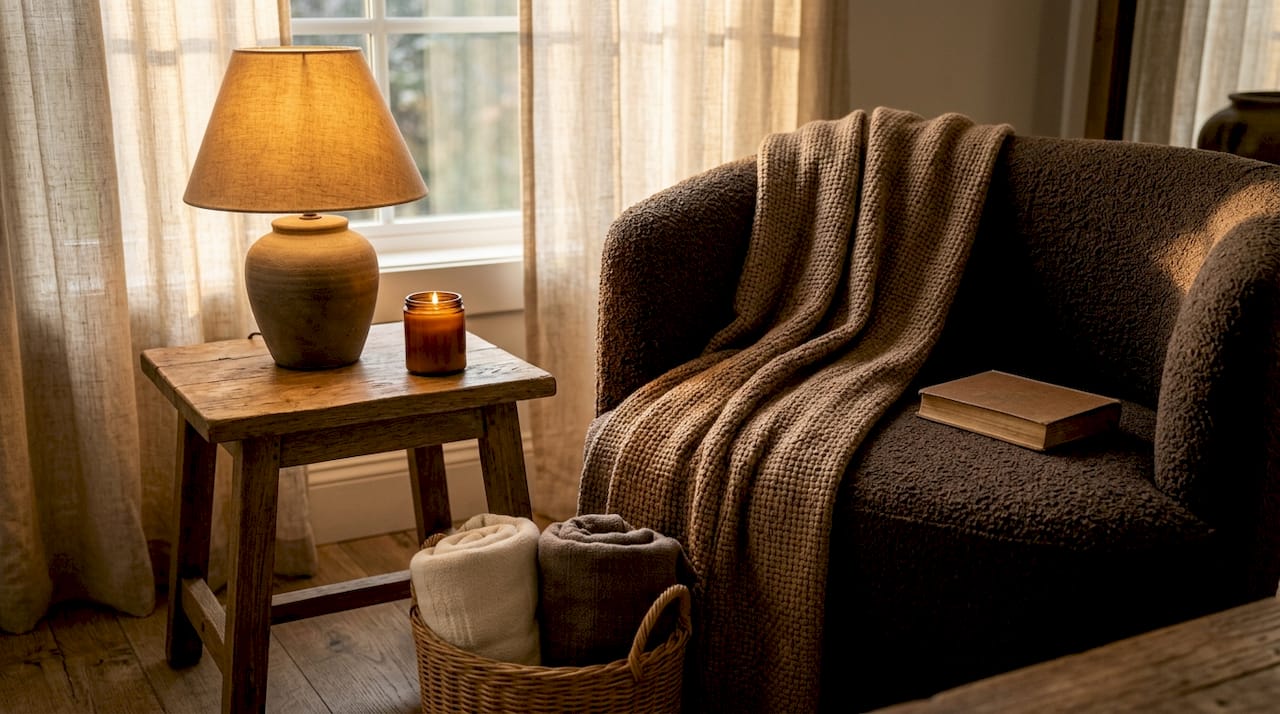
Nordic lighting guides recommend reducing ceiling lighting to 20 to 30% in the evenings and relying on multiple smaller sources instead. This creates pools of warm light rather than a single bright wash. Dimmers on any overhead fixture give you control over the mood at different times of day. Positioning lamps so their light falls directly onto textured surfaces, such as a chunky knit throw or a wooden side table, makes the room read as warmer than it actually is.
Pro Tip: Use LED bulbs with a built-in diffuser or frosted glass shade to eliminate visible bulb glare. Exposed filament bulbs look attractive but produce hot spots that undercut the soft, enveloping quality hygge lighting requires.
- Table lamps with linen or paper shades for diffused warmth
- Floor lamps placed beside reading chairs or sofas
- Wall sconces at seated eye level in living rooms and bedrooms
- String lights along shelves or window frames for ambient fill
2. Candles as a daily hygge ritual
Candlelight signals a shift to relaxation and functions as both a lighting layer and a psychological cue. Hyggeable identifies this as a mood and routine anchor, not just decoration. Pillar candles work well on coffee tables and mantels. Votives cluster effectively on trays or in groupings of three or five. Tea lights fit inside lanterns or glass holders placed on shelves and windowsills.
Candle placement affects hygge authenticity directly. Candles placed in rooms you rarely use do nothing for the experience. They belong within sight of your primary seating area, close enough that the flicker registers in your peripheral vision while you read or talk. Unscented or lightly scented options in warm tones like amber, cream, or terracotta reinforce the visual palette without overpowering the space.
3. Chunky knit and textured throws
Textiles are a core hygge element, with texture taking priority over color brightness. Chunky knit throws, wool blankets, faux fur, and warm linens each deliver a different tactile quality. The goal is to have something soft within reach from every seat in the room. Drape a textured throw blanket over the arm of a sofa, fold one at the foot of a bed, and stack extras in a basket near the fireplace.
Material matters more than pattern. Wool and chunky knits retain heat and have visible texture that reads as warm even before you touch them. Faux fur adds contrast and luxury at low cost. Cotton and linen work in warmer climates where heavy wool feels excessive. Mixing two or three materials in the same seating area creates depth without visual clutter.
Pro Tip: Stick to a palette of two to three neutral tones across your textiles. Oatmeal, warm white, and soft sage layer together without competing. Introduce one slightly bolder tone, like rust or dusty rose, through a single pillow or small throw.
- Chunky knit throws in wool or cotton blend
- Faux fur accent blankets for contrast texture
- Linen pillow covers in warm neutrals
- Wool or fleece lap blankets for reading chairs
4. Layered rugs for underfoot warmth
Layering rugs builds islands of softness and adds texture complexity to any room. The standard approach pairs a large natural fiber base rug, such as jute or sisal, with a smaller patterned or plush rug on top. The base rug anchors the furniture grouping. The top rug adds softness and visual interest directly underfoot where people sit or stand most.
Hard floors, even beautiful ones, read as cold in winter and in photographs. A layered rug arrangement solves this without requiring permanent changes to the floor. Wool rugs hold warmth better than synthetic options. For living rooms, a 9x12 jute base with a 5x8 wool or cotton rug centered on top is a reliable starting point.
5. Throw pillows with tactile texture
Throw pillows serve two functions in hygge interior design ideas: they add visual softness and they invite physical contact. A sofa with flat, firm cushions signals formality. The same sofa loaded with textured pillow covers in knit, boucle, or woven cotton signals rest. Four to six pillows on a standard three-seat sofa is the practical range. More than that tips into clutter.
Texture variety matters more than color matching. Combine a smooth linen cover with a chunky knit and a woven cotton in the same neutral family. The contrast between surfaces is what creates the layered, lived-in quality that defines hygge. Avoid pillows with large graphic prints or high-contrast patterns, which pull visual attention rather than settling it.
6. Natural materials: wood, ceramics, and woven baskets
Natural materials ground hygge decor in physical reality. Rustic or worn wood surfaces, handcrafted ceramics, and woven baskets each bring organic texture that manufactured materials cannot replicate. A wooden tray holding candles on a coffee table, a ceramic mug on a side table, and a handmade woven basket storing extra throws are all functional objects that also serve as decor.
The comparison below shows how natural materials outperform synthetic alternatives in hygge contexts:
| Material | Hygge quality | Best use |
|---|---|---|
| Reclaimed wood | High warmth, visible grain | Shelves, trays, side tables |
| Handcrafted ceramic | Tactile, imperfect surface | Mugs, vases, bowls |
| Woven rattan or wicker | Organic texture, light weight | Baskets, lampshades, trays |
| Synthetic plastic | Low warmth, uniform surface | Not recommended for hygge |
| Polished metal | Cold visual tone | Use sparingly as accent only |
Woven storage baskets solve a practical hygge problem: clutter breaks the calm. Baskets keep throws, magazines, and remotes contained without hiding them behind closed doors. The basket itself becomes part of the texture story.
7. Live greenery and dried botanicals
Plants introduce organic color and movement into hygge spaces without disrupting the muted palette. Low-maintenance options like pothos, snake plants, and olive trees work well in living rooms and bedrooms. Dried botanicals, including pampas grass, dried lavender, and eucalyptus branches, add texture and subtle scent without requiring water or light.
The key is scale. One large plant in a ceramic pot makes a stronger hygge statement than five small plants scattered across shelves. Dried arrangements in a simple vase on a dining table or mantel add warmth without demanding attention. Both live and dried options reinforce the connection to natural materials that hygge interior design ideas prioritize.
8. A dedicated hygge nook or cozy zone
Dedicated hygge zones invite mindfulness and create a physical anchor for restorative moments. The Hygge House identifies window seats and fireplace corners as the most effective locations. The formula for a functional nook is straightforward:
- One comfortable chair or window bench with a cushioned seat
- A soft throw draped within arm’s reach
- A candle or small lamp positioned at seated eye level
- A small side table for a warm beverage
- Minimal visual distractions: no screens, no cluttered surfaces
A fireplace, real or electric, serves as the natural hearth center for a hygge living room. Arrange seating to face the fire rather than the television. If neither is available, a grouping of pillar candles on a tray creates a focal point with similar visual warmth. The goal is a spot that feels intentionally designed for sitting still.
9. Muted, nature-inspired color palette
Muted earth tones and warm whites create the grounding atmosphere hygge requires. Furniture & Choice identifies soft terracotta, oatmeal, taupe, warm brown, and dusty pink as the most effective hygge palette choices. Matte or eggshell finishes on walls absorb light rather than reflecting it, which reduces visual harshness. Cool grays and bright whites read as sterile and work against the warmth hygge depends on.
Color discipline is the finishing move. A room with warm lighting, natural materials, and layered textiles loses its hygge quality if the walls are painted a cold blue or the furniture is high-gloss white. The palette should feel like it belongs outdoors in autumn: warm, soft, and slightly muted. Accent colors, if used at all, stay within the warm spectrum.
10. Sensory layering: scent, sound, and warmth together
Integrating multiple sensory layers in the same zone maximizes the hygge experience. Light, touch, and scent working together in one area produce a stronger effect than the same elements spread across different rooms. A reading corner with a warm lamp, a chunky throw, a scented candle, and soft background music delivers a complete sensory experience. Each element reinforces the others.
Scent is the most underused hygge tool. Beeswax candles, cedarwood diffusers, and fresh eucalyptus all produce warm, natural aromas that signal comfort. Sound matters too: soft acoustic music or ambient nature sounds at low volume completes the atmosphere without demanding attention. The combination of warm light physically illuminating tactile surfaces, as Next Idea Decor recommends, is what separates a genuinely cozy room from one that only looks cozy in photos.
Key takeaways
A complete hygge home requires warm layered lighting, texture-rich textiles, natural materials, and intentional cozy zones working together in the same space.
| Point | Details |
|---|---|
| Lighting is the baseline | Use 2700K to 3000K bulbs, dimmers, and multiple small sources instead of overhead light. |
| Textiles need texture variety | Layer chunky knits, faux fur, and linen in two to three neutral tones per seating area. |
| Natural materials over synthetic | Wood, ceramics, and woven baskets add organic warmth that manufactured materials cannot replicate. |
| Cozy zones need a formula | Combine a comfortable seat, soft throw, candle, and warm light in one dedicated spot. |
| Palette discipline matters | Stick to muted earth tones and warm whites; cool grays and bright whites undercut hygge warmth. |
What I’ve learned about hygge that most decor guides skip
Most articles on creating a hygge space treat it as a shopping list. Buy the throw, light the candle, done. That misses the point entirely. The rooms that actually feel hygge are the ones where the elements are placed where you live, not where they photograph well. A candle on a shelf across the room does nothing for you while you sit on the sofa. The same candle on the coffee table in front of you changes the entire experience.
The other thing most guides skip: scent and sound are not optional extras. They are load-bearing elements. A room with perfect lighting and beautiful textiles still feels incomplete without a subtle warm scent and quiet background sound. The sensory combination is what triggers the psychological shift from alert to at ease. That shift is what hygge is actually about.
I also think people overcomplicate the color palette question. You do not need to repaint your walls. Swapping out cool-toned throw pillows and synthetic blankets for warm-toned, textured alternatives does more for the hygge atmosphere than any wall color change. Start with what you touch first.
— Stitched
Bring hygge home with Elarahandmadeboutique
Elarahandmadeboutique makes small-batch, handcrafted textiles and baskets built around the same principles this list covers: texture, warmth, and natural materials. Every piece is designed for use, not just display.

The cozy living collection includes chunky knit throws, textured pillow covers, and woven blanket baskets that cover the core hygge textile and storage categories in one place. Each product is made in small batches from quality materials, which means the texture and weight you see in photos is what arrives at your door. If you are building out a hygge nook or refreshing a living room, the neutral knit blanket basket is a practical starting point that handles both storage and decor at once.
FAQ
What are the core hygge home decor elements?
The core hygge home decor elements are warm layered lighting, texture-rich textiles like chunky knits and wool throws, natural materials including wood and woven baskets, and a muted earth-tone color palette. HGTV identifies these categories as the foundation of hygge interior design.
What color temperature bulb is best for hygge lighting?
Bulbs with a color temperature between 2700K and 3000K produce the warm, amber-toned light that defines hygge ambience. This range replicates candlelight and is the technical standard recommended by Nordic lighting guides.
How do you create a hygge nook at home?
A hygge nook requires a comfortable chair or window seat, a soft throw within arm’s reach, a candle or small lamp at eye level, and a side table for a warm drink. The Hygge House recommends fireplace corners and window seats as the most effective locations.
What textiles work best for hygge decor?
Chunky knit throws, wool blankets, faux fur accents, and linen pillow covers are the most effective hygge textiles. Texture takes priority over color, and layering two or three materials in the same seating area produces the tactile warmth hygge requires.
Does hygge decor require a complete room redesign?
No. Swapping synthetic textiles for textured natural-fiber alternatives, adding warm-toned lamps, and placing candles near your primary seating area produces a measurable hygge effect without structural changes or repainting.